One day · in person · Stellenbosch
The Assembly
A one-day interdisciplinary seminar proceeding by juxtaposition rather than survey — a permit beside a novel, a loom beside a face, a wind farm beside a galaxy, a broken bowl beside a love deferred — on the wager that the comparison is itself the argument.

Convenor
Dr Bo Lyu
Modern Foreign Languages, SU

Facilitator
Prof. Catherine Du Toit
Modern Foreign Languages, SU
Presenters & topics
Eight presenters, in running order. The day proceeds by juxtaposition: four pairs, each setting one kind of waiting beside another — then a hearing in which the whole room takes part. Times are on the day.
Juxtaposition I · A permit beside a novel
Waiting imposed by the state — and the home that is always still on the way.
-

Theme I · 09:20
Waiting in administrative & immigration law
June Luna · Admitted Attorney of the High Court · June Luna Immigration Attorneys
Waiting in South African administrative law and immigration practice — the Home Affairs file that is never refused and never granted; visas, permanent residence and citizenship as lived deferral.
-
Theme II · 09:50
Racing against time / waiting en route
Dr Bo Lyu · Modern Foreign Languages (Chinese) · Stellenbosch University · Convenor
Two Chinese literary figures of deferred life: Ha Jin’s Waiting and the diasporic subject of A Free Life — always en route between homes, never quite arriving; and Wang Jibing’s delivery rider in The Man Racing Against Time (2023) — a man not made to wait but forbidden to. Between the novel of suspended decision and the poetry of platform tempo, how Chinese writing distinguishes imposed delay from chosen patience, and what “home” means when identity is always still on the way.
Juxtaposition II · A loom beside a face
Those who stay behind — waiting for someone neither returned nor declared lost.
-

Theme III · 11:00
I wait for “Noman”: Homer’s Penelope and the heroism of staying behind
Dr Louise-Mari Muller · Lecturer and researcher · Ancient Studies · Stellenbosch University
Homer’s Odyssey is not only the tale of Odysseus’ wanderings, but also the story of Penelope, who stayed behind as his wife, co-ruler, and the mother of his child. Penelope’s sustained relevance as an archetypal figure was recently highlighted by Christopher Nolan’s 2026 film adaptation of the Odyssey. The prevalent influence of Nolan’s Odyssey highlights the urgent need for informed conversations around the roles of women, agency, the impact of ideology on translation, and the dynamic relationship between the portrayal of female roles in literature and the treatment of women in a real-world context. This paper examines the act of waiting and delay tactics in Homer, highlighting the importance of the ‘waiting woman’ as a significant societal role women have performed throughout history. Drawing on Njabulo Ndebele’s novel The Cry of Winnie Mandela (2003), as well as key parts from my own PhD project (2026) on women’s desires and sense of responsibility in scenes of departure in Homer, Vergil, and Elisabeth Eybers, this paper will demonstrate that women actively staying behind in their homes and homeland is just as heroic as men leaving for war.
“…this glorious house, where I was once a bride, richly filled with the best that life can offer… I shall always remember it, even in my dreams”Homer, Odyssey 21.77–79 — Penelope’s words to the suitors, announcing the bow contest
Louise-Mari Muller is a researcher in the Department of Ancient Studies at Stellenbosch University. Having graduated in March of this year with her PhD in Ancient Languages, Louise-Mari recently completed her Consolidoc fellowship and is currently a fixed-contract lecturer in the same department for two undergraduate modules on Greco-Roman ancient cultures. Her PhD dissertation is titled: “Scenes of departure: Women on desire and responsibility in Homer, Vergil, and Elisabeth Eybers”. She is deeply passionate about the ancient world and is grateful for a discipline that permits her to essentially read poetry about love and war for a living.
-

Theme IV · 11:30
Waiting to Be Named: Forensic Facial Depiction, Human Identification and the Time Between
Dr Elysia Greenway · Postdoctoral Researcher · VIZ.Lab, Visual Arts, Stellenbosch University — forensic facial imaging and human identification through transdisciplinary art–science research
For families of missing people, waiting is lived between hope and grief: a person is neither returned nor declared lost. Unidentified remains may be physically present in a mortuary yet socially absent, without a name. This unresolved absence produces ambiguous loss: grief without certainty, in which mourning has no recognised endpoint. Identification is not an event but a process shaped by fragmented records, strained infrastructure and decisions about which cases receive attention. Time accumulates as cases move, or fail to move, between institutions and forms of expertise. The delay has no individual author, yet its consequences are carried by unidentified people and searching families. People marginalised in life remain most vulnerable to being unidentified in death.
Forensic facial depiction brings forensic anthropology, forensic art, cognitive psychology and visual communication together to estimate facial appearance from human remains. In South Africa, it may provide an investigative pathway when primary identification methods have not resolved identity and comparative ante-mortem records are absent or inaccessible. A facial depiction does not identify a person; it returns a face to public view in the hope that recognition will generate information through which identification may become possible.
Drawing on VIZ.Lab research, the paper follows unidentified people through the medico-legal identification process to offer a material account of waiting. It considers how time gathers across records, referrals, operational thresholds and the circulation of images, and how institutional duration becomes lived uncertainty for families.
The face emerges as both a site of personhood and a technology of identification: something reconstructed, mediated and asked to perform in public. Yet no depiction performs neutrally or equally. The data, techniques and practices through which it is made and circulated may carry existing inequalities forward, making some faces more likely to invite recognition than others. Facial depiction may interrupt the wait, but it can also help determine whose face becomes recognisable, and whose wait continues. Who is given the possibility of identification, who remains unseen, and who carries the time between?
“The delay has no individual author, yet its consequences are carried by unidentified people, searching families, and those left without the power to end it.”Elysia Greenway, Waiting to Be Named (2026) — responsibility disperses, while the experience of waiting remains embodied
Dr Elysia Greenway is a postdoctoral researcher at VIZ.Lab, Visual Arts, Stellenbosch University, and a core member of Science for Justice in Forensic Human Identification. Her interdisciplinary practice brings craniofacial anthropology, forensic art and face-perception psychology into conversation with visual communication and humanitarian identification. She also works as a forensic anthropologist within ViSUN, Stellenbosch University’s Victim Identification Unit, supporting operational human identification. Her research examines how forensic images are produced, circulated and recognised, and how representational choices may either support or constrain identification. Working across visual arts, biomedical research and medico-legal practice, she is interested in context-responsive methods that restore personhood while addressing inequalities in forensic service delivery.
Juxtaposition III · A wind farm beside a galaxy
Waiting beyond the human scale — where those who wait cannot file a form.
-
Theme V · 13:10
The infrastructure does not wait: managed incompleteness and ecological harm in South Africa’s renewable energy frontier
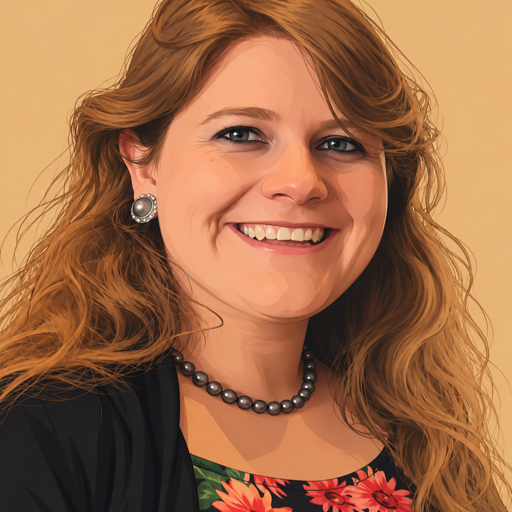
Dr Stephanie Borchardt · Postdoctoral Research Fellow · Sociology & Social Anthropology · Stellenbosch University
South Africa authorises renewable energy infrastructure even when its ecological consequences are not yet fully known. Environmental impact assessment does not eliminate this uncertainty; it institutionalises a process for managing it after construction begins. At wind farms, bird and bat mortality is monitored once turbines are operating, while mitigation measures and mortality thresholds can be revised as evidence accumulates. I call this managed incompleteness: uncertainty is neither denied nor resolved, but carried forward through monitoring, adaptive management, and the promise of better evidence. The infrastructure does not wait for knowledge; knowledge waits for the infrastructure. What is deferred is not recognition of harm, but action on it. Ecological specialists and provincial officials may identify emerging impacts, yet their capacity to intervene is constrained once projects are authorised and built. Meanwhile, species mortality continues. Waiting, then, is not simply an interval before a decision. It becomes a governance technique through which uncertainty persists, responsibility is dispersed, and ecological harm can accumulate without anyone having to deny it.
Ons tel voëltjies – we count little birds. In Loeriesfontein, waiting has become a wage. People count the dead beneath the turbine blades while the rule to stop is deferred.Loeriesfontein residents, household survey, 2019, and the author, SP Borchardt
Stephanie Borchardt is a Postdoctoral Research Fellow in the Department of Sociology and Social Anthropology at Stellenbosch University, affiliated with the DSTI/NRF SARChI Chair in the Sociology of Land, Environment and Sustainable Development. Her research focuses on energy justice, governance, and renewable energy infrastructure in South Africa. Her PhD research, Illuminating Energy Poverty (2023), examined how low-income households in De Aar experience energy poverty, how they meet their everyday energy needs, and how the development of a major renewable energy hub shapes access to energy and local livelihoods. She teaches Environmental Sociology and Social Research Methods at Stellenbosch and serves on the scientific committee of the Arid Zone Ecology Forum.
-

Theme VI · 13:40
Wait in the Universe; Wait and chances in life
Prof. Yin-Zhe Ma · Professor of Physics · Stellenbosch University
Light-travel delay, the early universe: when “too long to wait” is written into physics. Later, a mathematical model of why most of the time in a life is waiting — and of what one does to prepare for the chances.
Juxtaposition IV · A broken bowl beside a love deferred
Waiting chosen, and what it costs — patience as self-denial, and love put off.
-
Theme VII · 14:40
To wait or not to wait? ‘Patience’ as a form of self-denial in Jeanne Benameur’s La patience des traces (2022)
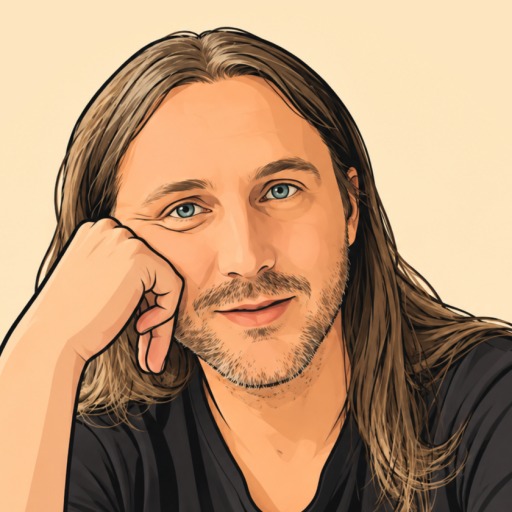
Jaco du Plooy · Junior Lecturer and module coordinator, French · Modern Foreign Languages · Stellenbosch University
In her 2022 novel La patience des traces, Jeanne Benameur tells the story of psychoanalyst Simon Lhumain who decides to leave his life behind and travel to Japan after accidentally breaking his favorite childhood bowl one morning. After years of quietly listening to his patients finding some form of healing while always setting his own aside, it is only at the other end of the world that he finds the courage to put himself first. His meeting and subsequent friendship with Monsieur and Madame Itô leads him to rediscover himself and allows him the opportunity to face the past trauma that has been patiently waiting to one day be confronted.
The novel’s title highlights the importance of patience as a theme, which then naturally links to the idea of waiting since the former is primarily defined by the latter. Benameur’s portrayal of patience, however, stems from the character’s own choice to wait instead of having to wait due to choices made by others. Patience remains a form of self-control, yet by having her characters, especially Simon, self-impose an extended period of waiting, Benameur asks us to consider the line between self-control and self-negating. The double sense in both English and French ‘patience’ and ‘patients’ invites us to reconsider the traditionally positive connotations with patience, especially within the context of Simon’s story. In other words, could too much patience ultimately negatively impact the self and eventually turn into self-inflicted suffering?
Jaco du Plooy holds a master’s degree in comparative literature at Stellenbosch University and has been working as a junior lecturer and module coordinator within the French section of the department of Modern Foreign Languages for the last eight years. He is also linked to the Faculty of Military Sciences and presents weekly French classes for staff and students at their Military Academy in Saldanha. His research in comparative literature reflects his passion for French and Afrikaans and how literature from both languages reflects cultural similarities and differences concerning various themes. Other research interests include the relation between the Self and the Other as well as the application of complexity theory to literature.
-
Theme VIII · 15:10
Love deferred
Prof. Catherine Du Toit · Modern Foreign Languages · Stellenbosch University · Facilitator
Fascinated by the inner workings of love, Henri-Pierre Roché would dedicate his life to its observation. In his second novel, he captures the impact of deferral on nascent love through parallel juxtaposition, testing the very limits of text as life incarnate.
The programme is complete. There is no question time on the day: every question for a presenter is filed on the debate wall and waits there for an answer. Please reply by Friday 30 October — nobody only watches.